
I'm a Personal Trainer With 200+ Clients. Last Year, Several of Them Quietly Stopped Coming to the Gym. When I Found Out Why, I Wasn't Even Mad.
What they discovered at home was something I — a certified trainer — couldn't give them in a gym setting. And I've spent the last six months recommending it to everyone who's ever told me "exercise just isn't for me anymore."

 Fitness & Rehabilitation | March 2026
The Client Who Disappeared
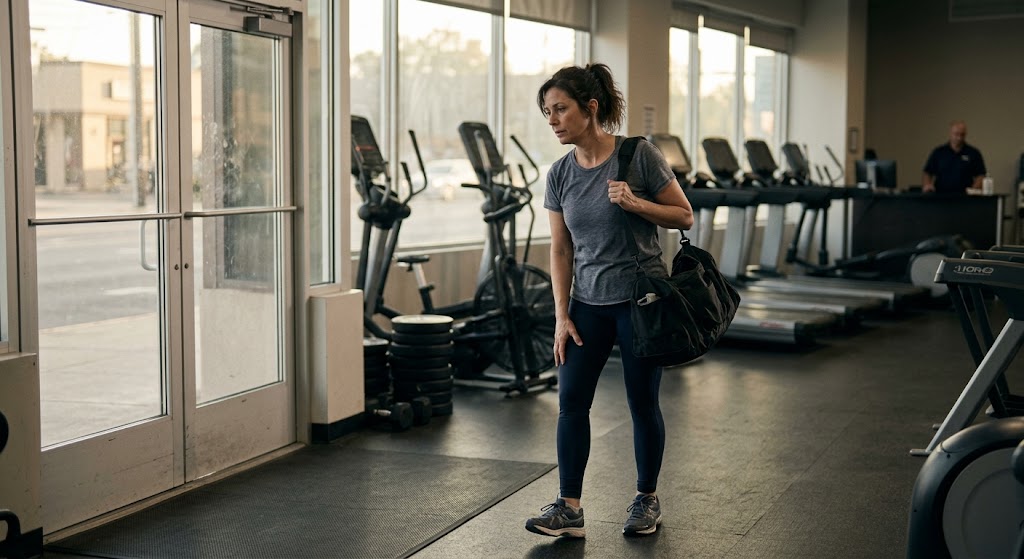
Her name was Linda. 47 years old, two bad knees, a desk job, and more determination than almost anyone I'd trained.
She'd tried everything. Running — quit after two weeks with knee pain so bad she was limping to her car. HIIT classes — lasted one month before her orthopedist told her to stop immediately. Cycling — better, but the gym was forty minutes from her house and she had two kids and a full-time job.
Every time Linda started, something ended it. Not her will. Her body.
She came to me as a last resort. "I just want to move without hurting," she told me at our first session. "I don't need to look like a fitness model. I just want to feel like myself again."
We worked together for three months. Slow, careful, low-impact. She made progress. Real progress.
Then she stopped showing up.
Customer Reviews
By Feature
Price ★★★★★ 5.0
Effectiveness ★★★★★ 5.0
Comfort ★★★★★ 5.0
Quality ★★★★☆ 4.8
The Phone Call That Changed How I Train
I called her six weeks after her last session, expecting the usual story. Life got busy. The kids. Work. The commute.
Instead she said: "Daniel, I'm still working out. Every single day. I just… don't need to come in anymore."
I asked her what she was doing.
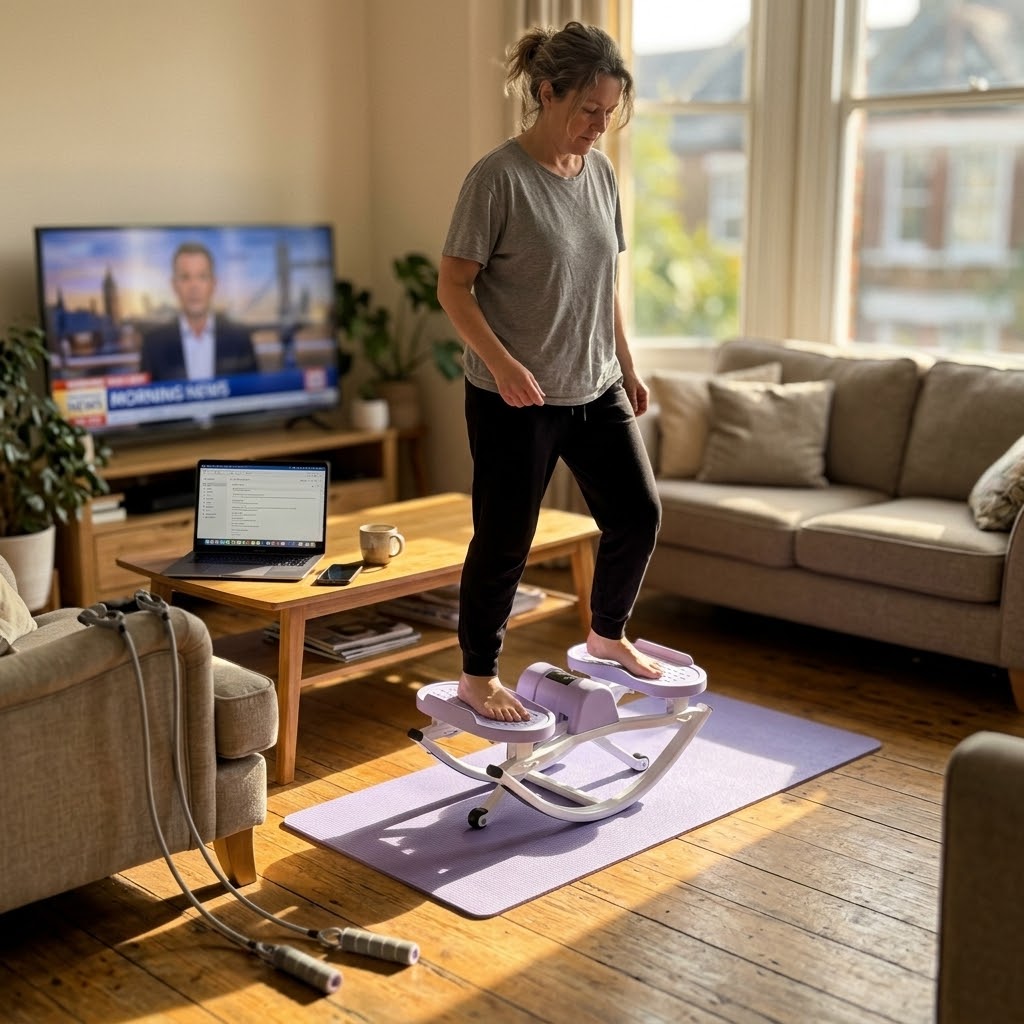
She described a machine she'd found online. Compact. Rocking side to side instead of up and down. She was using it every morning for 20 minutes before her kids woke up and every evening while watching TV.
Her knees hadn't hurt once.
I'll be honest with you — my first reaction was professional skepticism. I've been training clients for eleven years. I know what works and what's sold to people who want shortcuts.
But Linda wasn't describing a shortcut. She was describing consistency. Daily, painless, zero-friction movement that she'd been able to maintain for six weeks without a single setback.
That got my attention.
→ See what she was using that kept her consistentSo I Actually Looked Into It
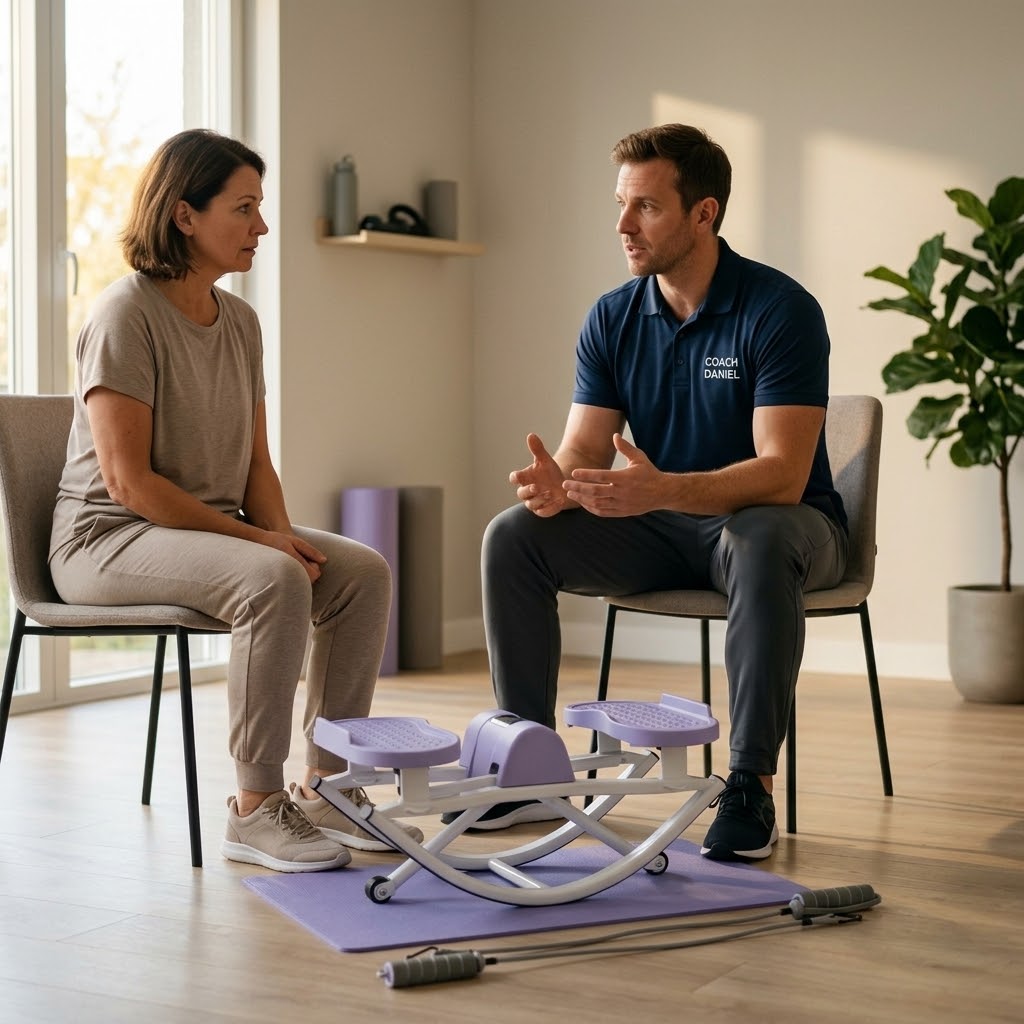
I spent two weeks researching the mechanics before I'd consider recommending it to anyone.
Here's what I found — and why it matters for women with knee pain, joint sensitivity, or a history of quitting workouts because their body couldn't keep up.
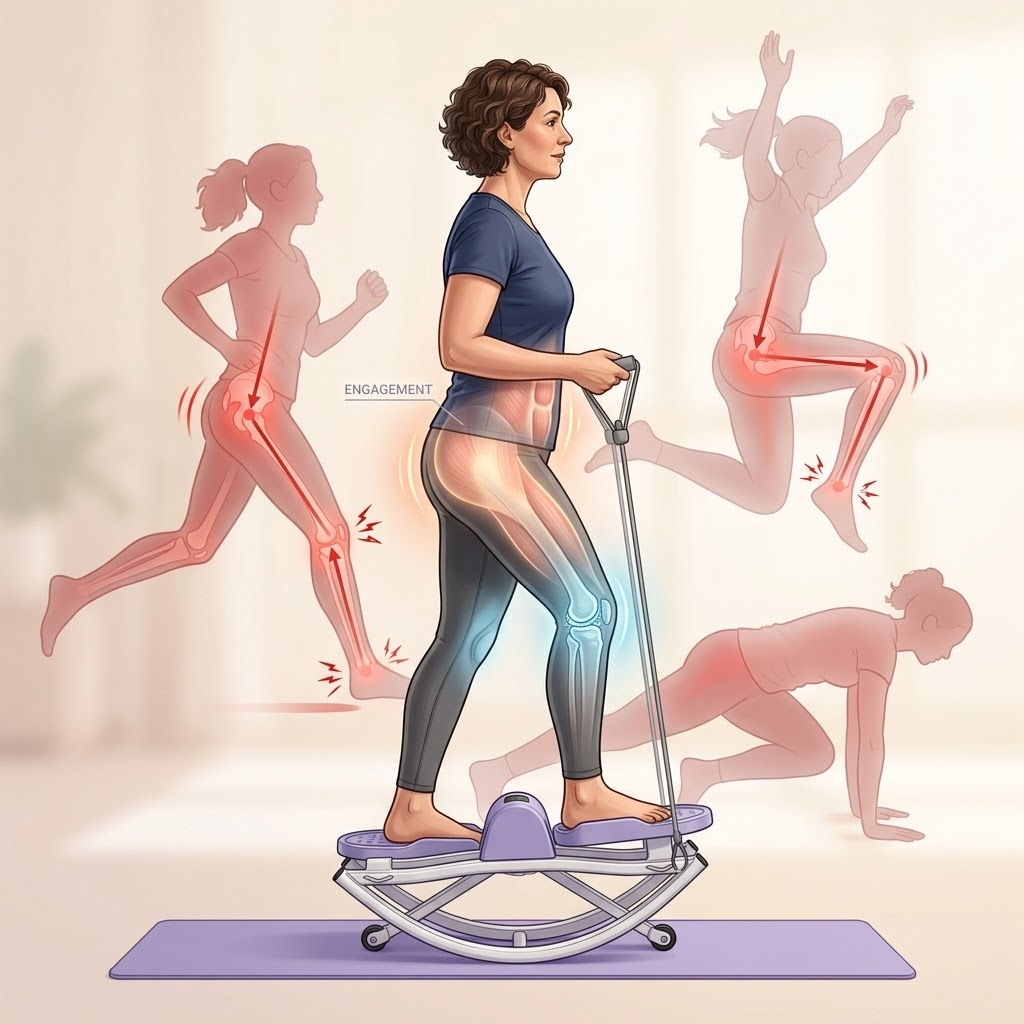
Traditional cardio — running, jumping, even most stepping — involves repeated vertical impact. Every stride, every jump, every up-and-down step sends force through your ankles, knees, and hips. For someone with healthy joints, that's manageable. For someone with sensitivity, inflammation, or past injury, that force accumulates. That's why so many women can start a workout program and feel fine for two weeks — until they don't.
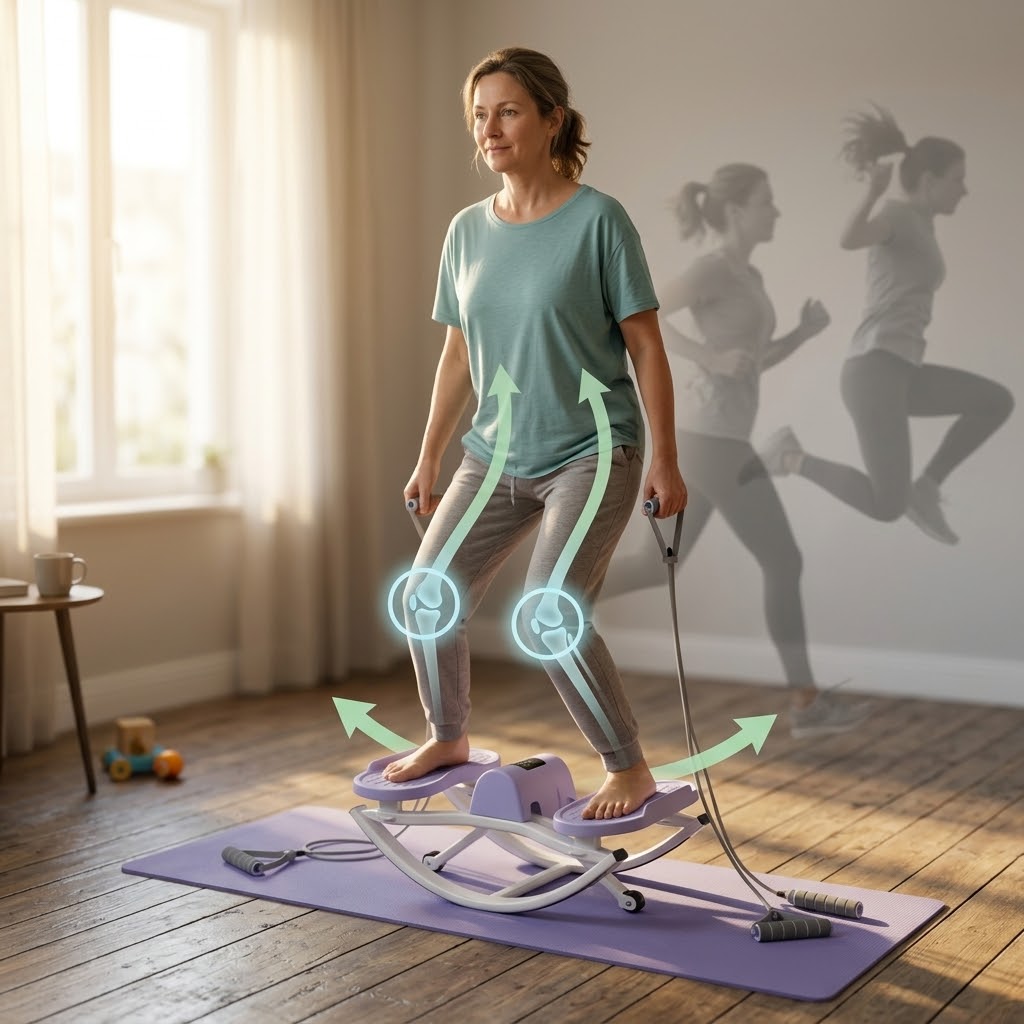
Lateral rocking motion is fundamentally different. Instead of impact, you're generating smooth, controlled movement side to side. Your joints aren't absorbing force — they're guiding motion. The load goes where it belongs: into your muscles. Your inner thighs, outer thighs, glutes, and core engage constantly just to maintain your balance, but your knees stay completely quiet throughout.
It's not easier because it's less effective. It's easier because it's smarter.
That distinction matters enormously for the women I work with who've been told — explicitly or implicitly — that their bodies are too broken to exercise properly.
They're not broken. They've just been given the wrong tools.
→ See why this approach is different from anything you've tried beforeWhat Happened When I Started Recommending It
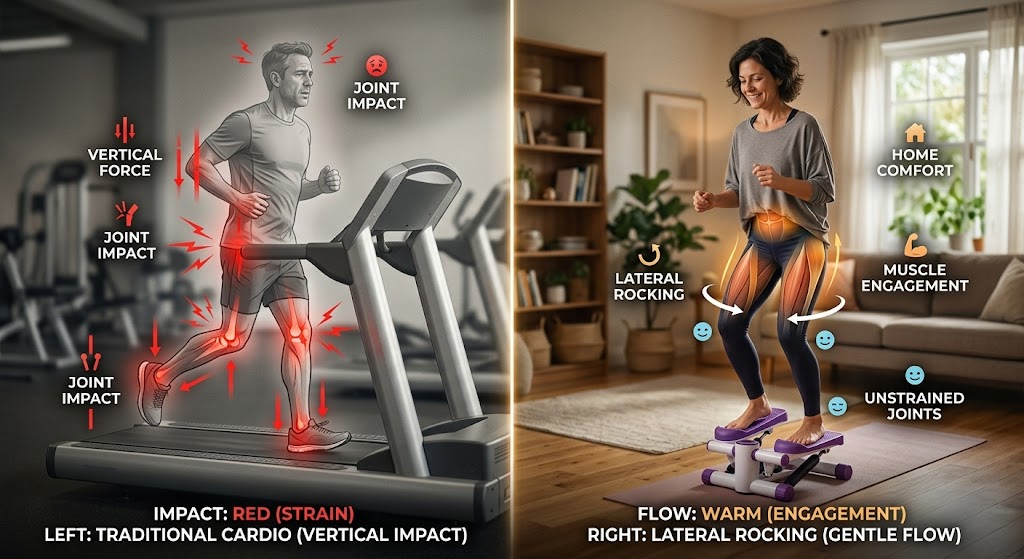
I want to be upfront: I was cautious. I don't recommend products lightly, and I don't recommend anything I haven't seen work across a range of clients — not just one.
So over four months, I quietly suggested it to eight clients. All women between 34 and 61. All with some version of the same story: previous injury, joint sensitivity, a history of starting and stopping, a deep suspicion that consistent exercise simply wasn't available to them anymore.
What I tracked over those four months:
Every single one was still using it at the 8-week mark. In eleven years of training, that retention rate doesn't happen with gym memberships, class packages, or home equipment I've recommended before.
Six reported noticeable leg and glute toning within the first month. Three told me their chronic knee stiffness — the kind that makes getting up from a chair feel like an event — had improved significantly just from daily low-impact movement restoring circulation to the joint.
Two of them, including Linda, lost over ten pounds. Neither changed their diet dramatically. They simply started moving every single day for the first time in years.
But the number that stayed with me most: seven out of eight told me some version of the same thing. "I finally feel like exercise is something I can do."
Not did. Can do. Present tense. That shift in identity is worth more than any number on a scale.
→ See what made the difference for all eight of them"But Is It Actually Safe?" — Let Me Answer That Properly
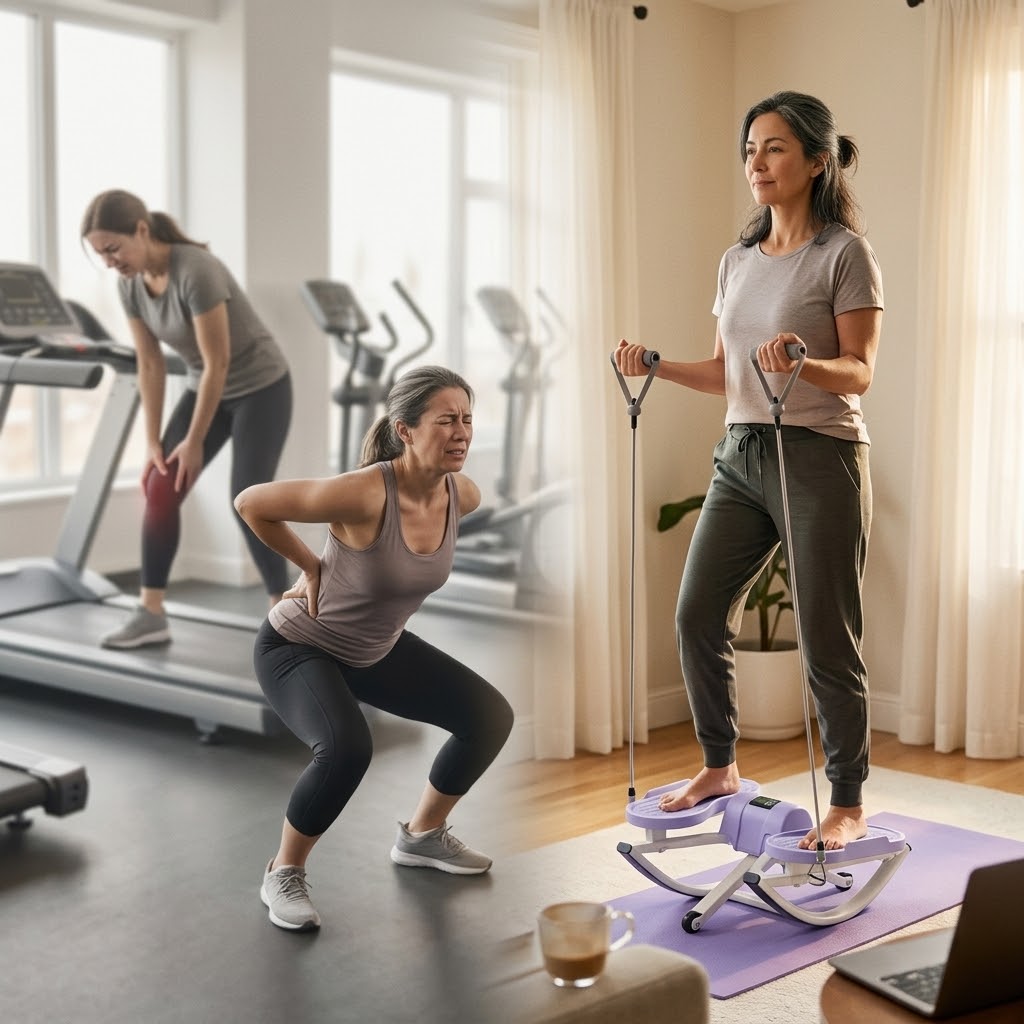
I get this question constantly now, so let me address it the way I would with any client sitting across from me.
The lateral rocking motion places minimal stress on the knee joint because there is no impact phase. You are not landing, you are not pounding, you are not compressing the joint under bodyweight repeatedly. The movement is smooth, the resistance is gradual, and the pace is entirely yours to control.
For most people with general knee sensitivity, joint stiffness, or a history of impact-related pain — this kind of movement is not just safe, it's actively beneficial. Low-impact movement improves circulation to joint tissue, which reduces stiffness over time. Several of my clients noticed this within weeks.
That said: if you have a diagnosed knee condition, recent surgery, or have been told by a doctor to avoid specific movements — please check with your physician first. I say this not as a disclaimer but because I mean it. Know your body, know your limits, and introduce any new movement gradually.
Start with ten minutes. See how you feel the next morning. Build from there.
The goal isn't to push through pain. The goal is to find movement you can sustain without pain. Those are very different things.
→ See how women with knee sensitivity are using this dailyThe Moment I Knew I'd Been Wrong About Something
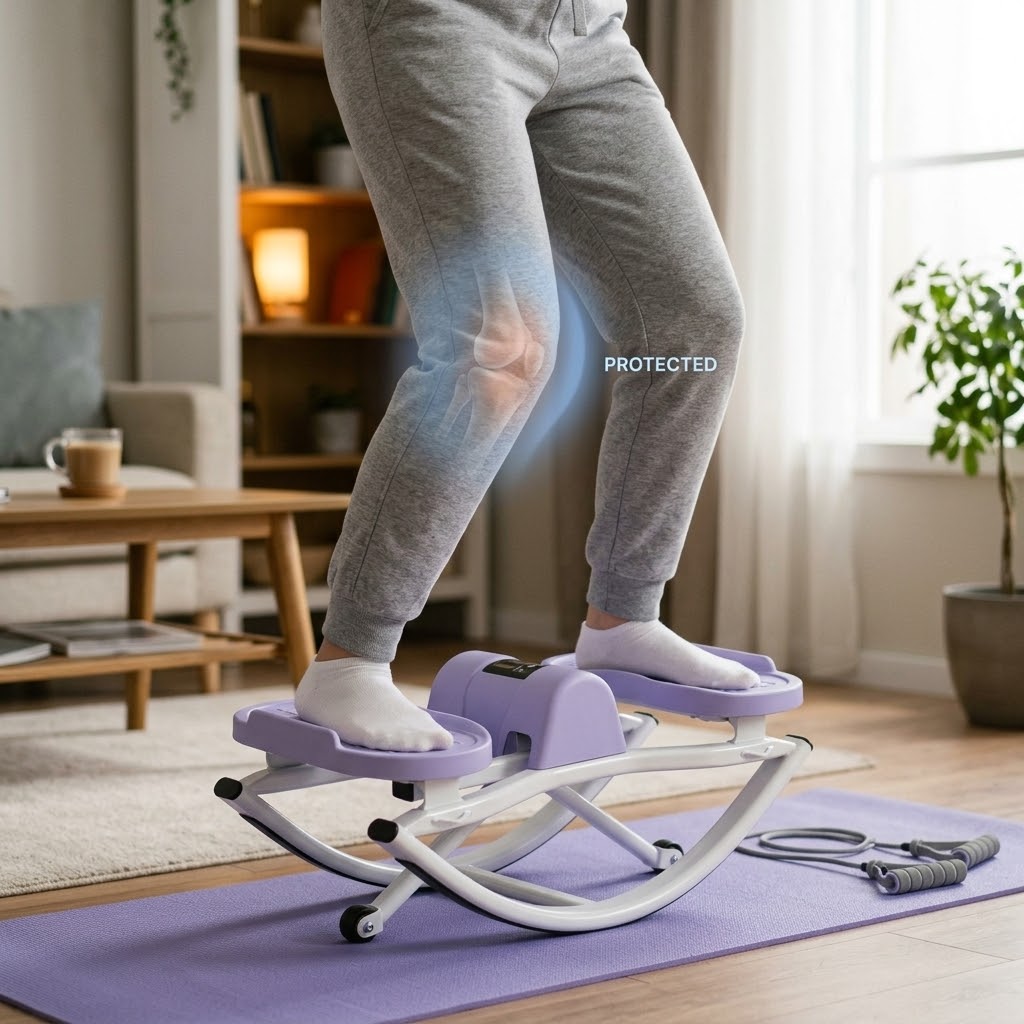
Six months into watching my clients use this, I had to sit with an uncomfortable realization.
For years I'd operated with a quiet assumption: that clients who quit were quitting because of mindset. Lack of discipline. Inconsistent commitment. The usual story trainers tell themselves.
But Linda didn't quit because of mindset. She quit because every option available to her eventually hurt her. And when something stopped hurting her — when movement finally felt sustainable and safe — she didn't quit at all.
The barrier was never motivation.
The barrier was pain.
And I think there are thousands of women sitting in the same place Linda was. Not lazy. Not undisciplined. Just quietly convinced, after years of trying and stopping and hurting, that their body wasn't built for this.
It is. It just needs the right starting point.
→ See what that starting point looks like for women rebuilding from zeroWhat's Actually In the Box — And Why It Matters
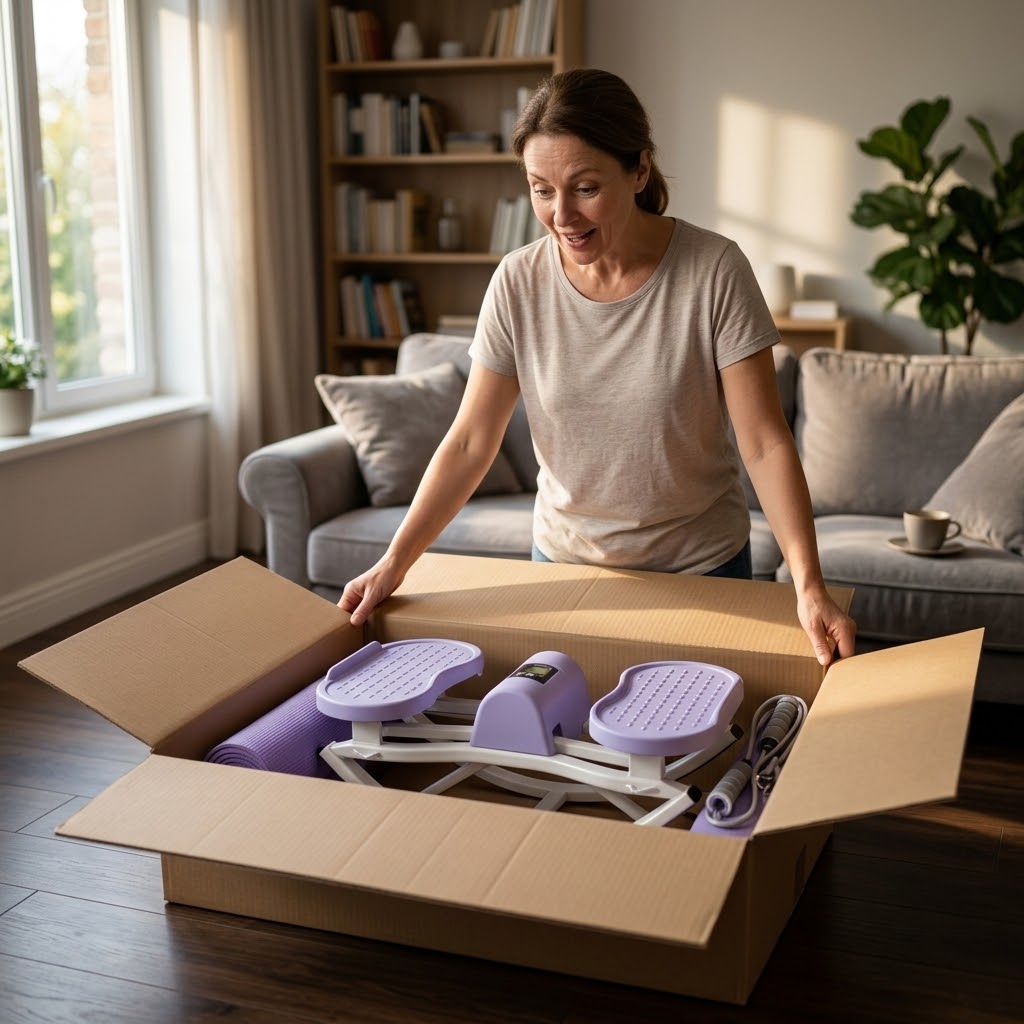
One of the things I tell every client before they start anything new: sustainability lives in the details. The things that seem small are usually what determine whether something sticks or collects dust.
This is what comes with it, and why each piece matters:
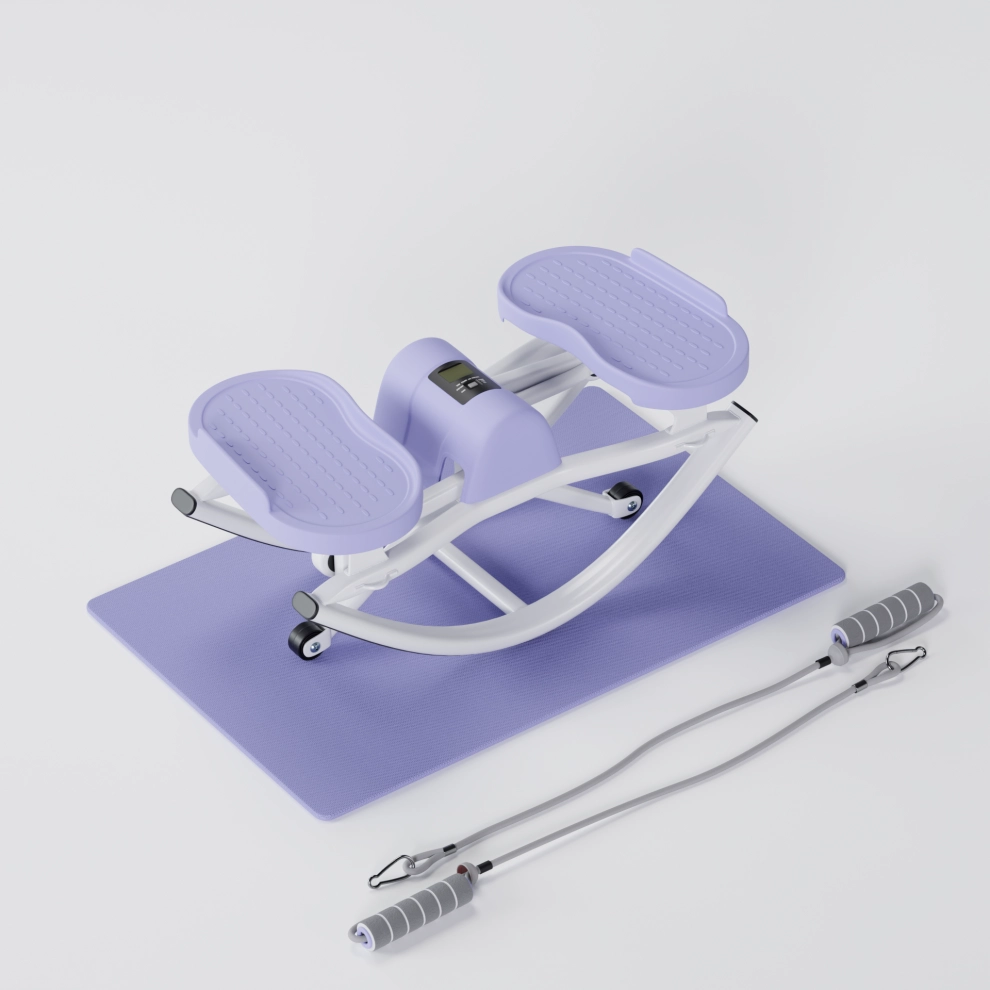
The non-slip mat means you can use it on hardwood, tile, or carpet without thinking about it. No sliding, no instability, no anxiety about falling — which matters enormously for women who are already nervous about starting.
The resistance bands add an upper body element when you're ready for it — but they're optional. Start without them. Add them when you feel confident. That progression matters.
The digital tracker shows you steps, time, and calories in real numbers. This is not vanity — this is evidence. When a client can see that they moved for 25 minutes and logged 2,800 steps while watching television, it stops feeling like nothing. It becomes something they want to repeat.
Everything arrives fully assembled. You open the box and you step on. There is no barrier between receiving it and starting.
That last detail sounds small. It isn't. The moment between "I'll set it up tomorrow" and "I'm already on it" is where most home equipment goes to die.
→ See everything that comes with itWhat My Clients Say Now
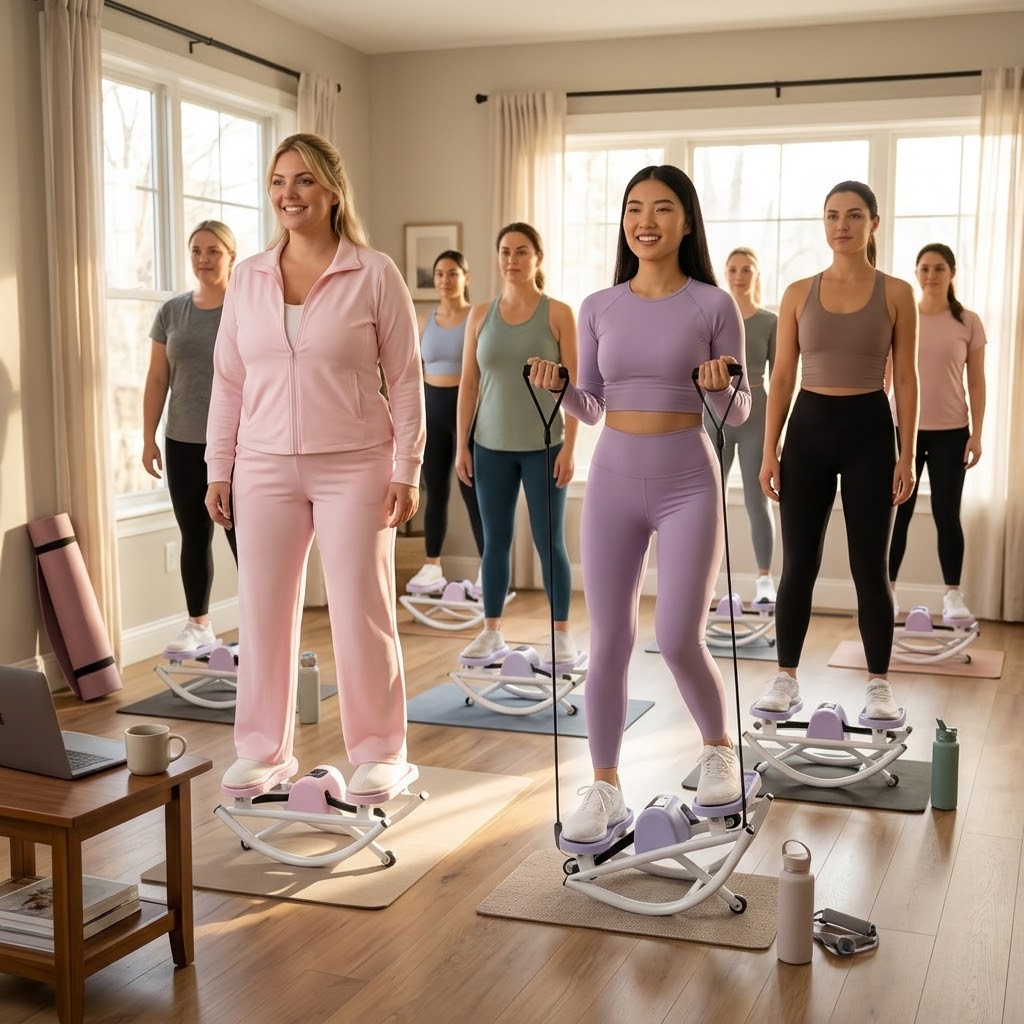
"I've had bad knees for seven years. I'd accepted that cardio just wasn't for me. I've been on this every day for ten weeks and my knees have not complained once." — Patricia, 52
"I lost 8 pounds and I genuinely did not change anything else. I just started moving every day. That was it." — Michelle, 44
"What changed for me wasn't the weight. It was that I stopped dreading it. It doesn't feel like exercise. It feels like something I just do now." — Karen, 38
"My doctor told me to move more but told me to protect my knees. I didn't know how to do both at the same time. Now I do." — Linda, 47
→ See what women rebuilding their fitness are sayingWho I Would — And Wouldn't — Recommend This To
As a trainer, I think honesty here is more useful than selling.
I would recommend this to you if: you have knee or joint sensitivity that has ended past workout attempts, you are restarting fitness after a long break and need something low-intimidation, you work from home or live a sedentary lifestyle and need daily movement without a gym, or you've tried high-impact cardio and paid for it physically afterward.
I would not recommend this as your only tool if: you are training for a specific athletic goal, you have a diagnosed joint condition without medical clearance, or you're looking for the intensity of a full gym program.
For the women I described above — the Lindas — this is the right starting point. Not because it's easy. Because it's sustainable. And sustainable is the only thing that actually works long-term.
The Part I Didn't Expect to Say
I started looking into this to verify whether it was legitimate. I ended up recommending it in my practice.
That's not a sentence I expected to write. But eleven years of watching people struggle with the gap between wanting to move and being able to move without pain — and then watching eight women close that gap with something that costs less than one month of gym membership — changed my perspective.
You don't need harder workouts. You never did.
You need safer ones. Ones your body can say yes to, day after day, without consequence.
That's it. That's the whole thing.
→ See what finally gave these women a way back inBefore You Go — The Practical Part
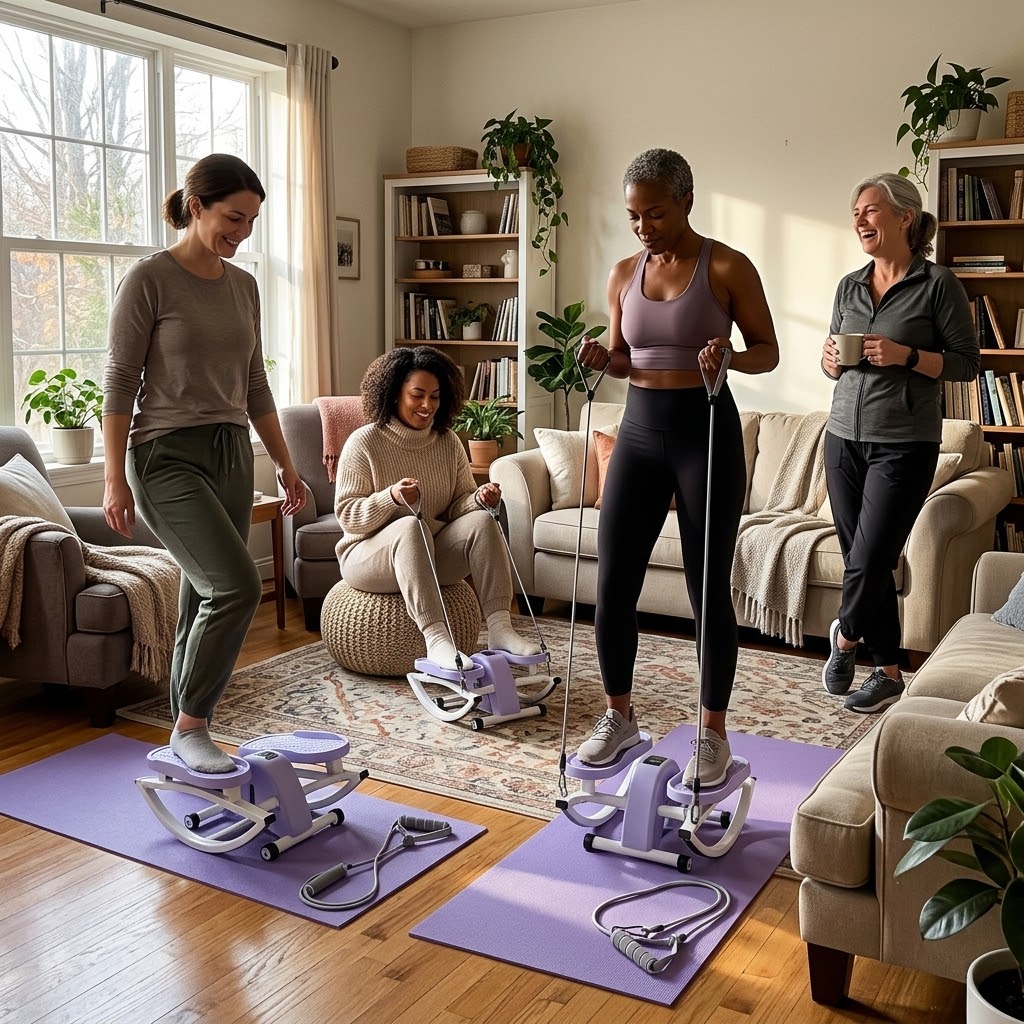
Is the guarantee real? Yes. 90 days, money back, no conditions. For something you're trying for the first time after a history of painful starts — that matters.
How do I know it's not just another viral scam? Over 3,500 verified reviews. Read the critical ones. The complaints are about shipping times, not the product. That tells you something.
How long before I feel something? Most of my clients felt muscle engagement within the first two sessions. Visible changes started appearing around weeks three to four with daily use.
What if I can only do five minutes at first? Five minutes is exactly right. Start there. Build when your body tells you to. The point is daily contact, not duration.
"I spent years believing my knees had taken exercise off the table permanently. Eight weeks later, I move every single day. Nothing hurts. I'm down nine pounds. And for the first time in a long time, I feel like my body is on my side."
— Linda, 47, Daniel's client
→ See if it's still available at the current priceNo gym time? Stay active at home with a simple stepping solution.
Customer Reviews
By Feature
Price ★★★★★ 5.0
Effectiveness ★★★★★ 5.0
Comfort ★★★★★ 5.0
Quality ★★★★☆ 4.8


